Google's August 2026 Ranking Volatility: Why AI-Niche Blog Traffic Is Dropping (And the Exact Recovery Steps)
Google's August 2026 Ranking Volatility: Why AI-Niche Blog Traffic Is Dropping (And the Exact Recovery Steps)
If your traffic fell this month and you didn't change anything on your site, you're not imagining it — and you're not alone. Here's what's actually happening in search right now, and the specific steps that separate sites that recover from sites that don't.
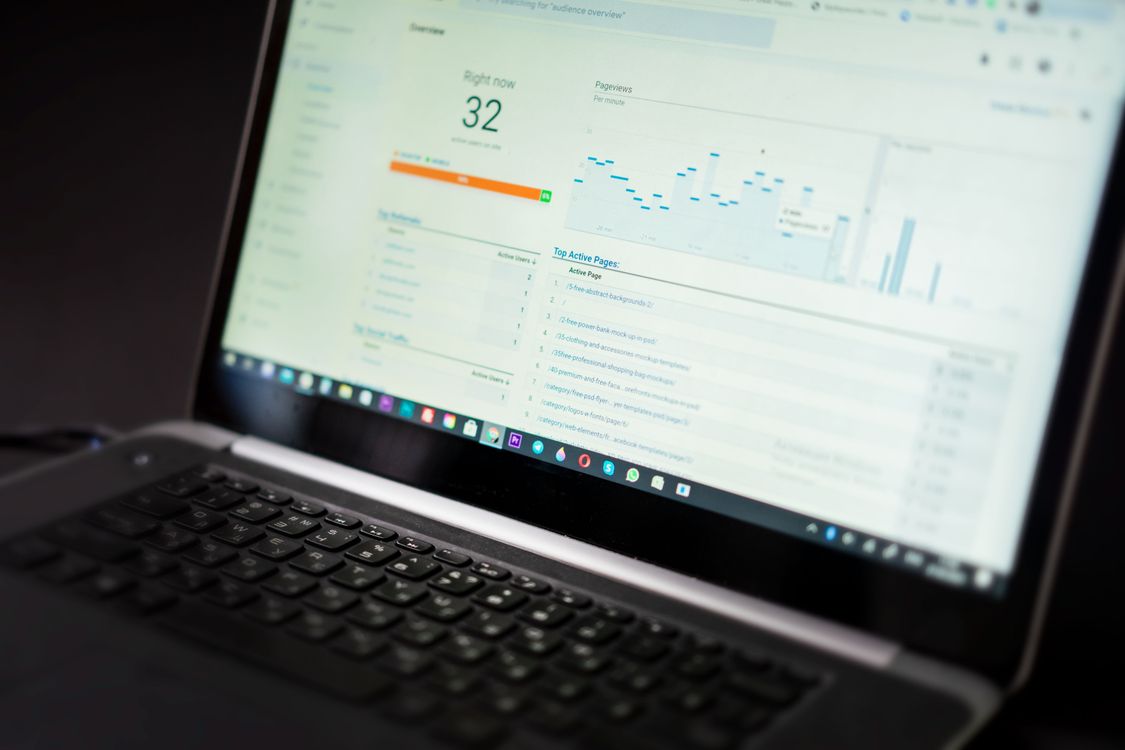
Starting around August 1, 2026, publishers across the web — including a large number of AI-niche and passive-income blogs, exactly the category RealIncomeLab operates in — began reporting sudden ranking volatility and traffic drops. As of this writing, Google has not officially confirmed a named core update for August. But "unconfirmed" doesn't mean "not happening": third-party ranking trackers spiked sharply on August 1 and stayed elevated through the first week of the month, and Google's own status dashboard shows no crawling, indexing, or serving incident during that window — meaning this isn't a technical outage, it's a ranking recalibration.
If you're reading this because your own traffic fell this month, this article is written directly for you. We'll cover what's actually changing in how Google evaluates content, how to tell whether your specific drop matches this pattern or something else, and the concrete steps that are working for sites that are recovering.
Quick summary if you're short on time:
- Google has not confirmed a named "August 2026 core update," but ranking volatility since August 1 is real, measurable, and ongoing.
- The consistent pattern across 2026's updates: pages that summarize what other pages already said are losing visibility, while pages with original data, firsthand testing, or named expertise are holding or gaining.
- The March 2026 update alone removed 24% of previous top-10 pages from search results — this is a genuinely higher bar than in past years, not routine fluctuation.
- Recovery is possible, but it rewards patience and specific fixes over panic and broad rewrites — jumping to conclusions before a rollout finishes is one of the most common mistakes sites make.
Table of Contents
- Is This Really a Core Update? What We Actually Know
- Why Traffic Drops Feel Sudden But Rarely Are
- The Pattern: What's Winning and What's Losing
- How to Diagnose Which Pages Actually Lost Traffic
- The Real Numbers: How Big These Drops Typically Are
- Step-by-Step Recovery Plan
- The "Firsthand Evidence" Standard (And How to Add It Fast)
- AI-Generated Content: What Actually Gets Penalized
- Technical Health Check
- What NOT to Do During Volatility
- How Long Recovery Actually Takes
- Turning a Traffic Drop Into a Content Audit Opportunity
- Case Studies: Real Patterns, Real Timelines
- Our Team's Honest Take
- FAQ
- Sources
1. Is This Really a Core Update? What We Actually Know
As of mid-August 2026, Google's last officially confirmed ranking change is the June 2026 spam update, which ran from June 24–26. Nothing has been formally named or confirmed for July or August. What is confirmed and measurable: third-party rank-tracking tools recorded a sharp volatility spike beginning August 1, continuing through at least August 6, alongside overlapping disruptions including a separate Google Ad Manager incident on August 4 and unrelated GA4 real-time reporting complaints — meaning several distinct issues got tangled together in publisher discussions during the same week.
The responsible conclusion, and the one we're working from in this article: Google's results became unusually volatile starting August 1, the volatility is real and measurable, but it may not share a single confirmed cause the way a named core update does. For practical purposes, though, this distinction matters less than you'd think — the diagnostic and recovery steps below apply whether this turns out to be a formally confirmed update or ongoing algorithmic tuning that never gets an official name.
2. Why Traffic Drops Feel Sudden But Rarely Are
A ranking drop almost always looks instant in your analytics, but it's rarely caused by something that happened that day. Google reportedly made 4,725 search algorithm changes in 2022 alone, and 4,781 in 2023 — the vast majority small and unnoticeable, but a handful of times a year those changes cluster into a broad "core update" that re-weights how quality is assessed across the entire index at once. When that happens, pages that were already borderline on originality, depth, or trust signals can drop multiple positions overnight, even though nothing on the page itself changed.
This is why the first instinct — "I didn't touch anything, so why did my traffic fall?" — is understandable but slightly misses the point. The page didn't get worse. Google's bar for what counts as good enough got higher, and pages that were passing a lower bar stopped passing the new one.
3. The Pattern: What's Winning and What's Losing
Across every core update tracked in 2026, one pattern shows up consistently: pages that summarize what other pages already said are losing visibility, while pages carrying something Google can't find anywhere else — original data, firsthand testing, named expertise, or genuine specific experience — mostly hold their rankings or gain. This isn't a new principle, but the margin for error has narrowed sharply.
| Update | Rollout length | Main focus |
|---|---|---|
| March 2025 core update | 14 days | Moderate volatility; 45% of tracked sites saw ranking shifts |
| June 2025 core update | 17 days | Increased weight on E-E-A-T (experience, expertise, authority, trust) |
| August 2025 spam update | 27 days | Link spam and manipulative content |
| December 2025 core update | 18 days | Very high volatility; hit 71% of affiliate sites, 67% of health sites |
| March 2026 core update | Not disclosed | Removed 24% of previous top-10 pages; heavy focus on AI Overview ranking |
| June 2026 spam update | 3 days (June 24–26) | Spam and manipulative content, faster rollout than prior spam updates |
Notice the trend: rollout speed and severity have both been increasing, and the target keeps sharpening on the same core issue — content that reads as though it exists to rank rather than to genuinely help the specific person searching for it.
4. How to Diagnose Which Pages Actually Lost Traffic
Before changing anything, find out exactly what happened using Google Search Console:
- Open Performance → Pages and compare the last 28 days against the prior 28 days. This surfaces the specific URLs with the biggest drops in clicks and average position.
- Sort by average position change and flag the steepest drops first. Falling from position 2 to 4 is usually noise; falling from the top 5 to page two deserves a closer look.
- Open the Queries report for each weak page over the same date range to see whether specific search terms lost their edge, and whether the losses cluster around a single topic or template.
- Check whether the lost queries now favor freshness. Google has long used "freshness" as a ranking factor for time-sensitive searches, so an older page can slip simply because newer content or data now better serves the same query.
- Group your biggest losers by topic, template, or content type rather than treating each URL as an isolated case — with over 200 known ranking signals in play, patterns across pages tell you far more than any single page in isolation.
5. The Real Numbers: How Big These Drops Typically Are
Source: SEO Vendor 2026 Core Update Briefing
Two numbers here are worth sitting with if your blog is in the AI-tools or passive-income niche specifically. First, affiliate-heavy sites were disproportionately affected in the December 2025 update — 71% saw changes, the highest of any category tracked, with top-3 ranking churn reaching 66.8%. Second, sites with strong Core Web Vitals scores (fast load times, stable layouts, good interactivity) consistently outperformed slower sites by 12–28% in traffic gains during the same period — a reminder that technical health isn't a separate issue from content quality, it's part of the same evaluation.
6. Step-by-Step Recovery Plan
- Wait for the rollout to finish before making broad changes. Prior updates have shown partial recoveries happening naturally as Google's own testing stabilizes — reacting mid-rollout risks fixing a problem that resolves on its own while creating a new one.
- Rewrite affected pages around one clear search task, and add firsthand proof wherever possible — your own numbers, your own screenshots, your own tested results, not just a better-organized version of what competitors already say.
- Merge or prune thin pages competing for the same topic. Multiple weak pages chasing the same keyword split your own ranking signals instead of reinforcing each other.
- Tighten titles, intros, and headings so the search query, the promise of the page, and the visible proof on the page all match clearly — both for readers and for how easily Google can confirm the page delivers what it claims.
- Remove or rewrite spam, weak automation, and stale claims sitewide. A single strong article can still be held back by dozens of thin, unedited pages elsewhere on the same domain — quality assessment increasingly happens at the site level, not just the page level.

7. The "Firsthand Evidence" Standard (And How to Add It Fast)
"Firsthand evidence" sounds abstract until you break it into concrete additions you can make to an existing article this week:
- A specific number from your own experience ("we saw X happen over Y weeks") instead of a general industry claim.
- A screenshot of your own dashboard, tool, or result rather than a stock image or a competitor's marketing screenshot.
- A stated opinion or recommendation, with reasoning, rather than a neutral list that avoids taking a position.
- A visible author or team byline with real, checkable context — not an anonymous "admin" post.
- An explicit mention of what you tried that didn't work, not just what worked — genuine experience almost always includes some failure or nuance a purely researched article wouldn't think to include.
None of this requires rewriting an entire article from scratch. Adding two or three of these elements to an existing page's weakest sections is often enough to shift it from "reads like it was assembled from research" to "reads like someone who actually did this wrote it" — which is precisely the distinction recent updates are drawing.
8. AI-Generated Content: What Actually Gets Penalized
This is worth being precise about, because it's frequently misunderstood: Google has never said AI-assisted content itself is penalized. What consistently loses visibility is content produced at scale with weak originality and thin evidence — regardless of whether a human or an AI tool typed the words. A well-researched, AI-assisted article with genuine firsthand additions performs completely differently from a mass-produced AI article with no original insight, even though both technically "used AI."
In practice, the sites hit hardest in 2026's updates share a common profile: heavy reliance on scaled, templated AI content and expired-domain redirects, thin pages published in bulk with minimal editing, and little to no visible firsthand experience or original data anywhere on the site. If your workflow already involves genuine editing, added personal insight, and original data — the standard RealIncomeLab holds every article to — you're already working from a stronger position than the sites these updates specifically target.
9. Technical Health Check
Before assuming a drop is purely about content quality, rule out the technical basics — they're a real factor in the data, not a minor footnote. Core Web Vitals (load speed, visual stability, interactivity) correlated with a 12–28% traffic advantage in recent update cycles. A quick checklist:
- Run your key pages through Google's PageSpeed Insights and fix anything flagged as "poor" for Core Web Vitals.
- Check Search Console's Coverage report for crawl errors, especially on recently published pages.
- Confirm your robots.txt isn't accidentally blocking content — a misconfigured crawl directive can look identical to a content-quality drop in your traffic graph, and it's an easy thing to overlook while focused on rewriting content.
- Verify your sitemap is current and submitted, especially after any recent site restructuring.
10. What NOT to Do During Volatility
- Don't make broad, sitewide changes mid-rollout. You risk reacting to temporary volatility rather than the settled result.
- Don't chase every keyword drop individually. Look for patterns across pages and templates before rewriting anything.
- Don't assume a drop means a manual penalty. Algorithmic re-ranking and manual actions are different mechanisms with different fixes — check Search Console's Manual Actions report before assuming the worst.
- Don't delete content in a panic. Pruning thin pages is a legitimate recovery step, but it should follow the diagnostic process in Section 4, not replace it.
- Don't judge recovery efforts too early. Analytics tools often show volatility for days or weeks after a rollout technically completes — early verdicts are one of the most common mistakes even experienced SEO teams make.
11. How Long Recovery Actually Takes
Recovery timelines vary, but the historical pattern gives a useful baseline: the March 2024 core update took 45 days to fully roll out, and sites that made genuine quality improvements — not superficial ones — saw meaningful recovery within the following one to two update cycles, typically 2–4 months. Rankings do not usually snap back within days of a fix, even a correct one; the page has to be re-crawled, re-evaluated, and in many cases re-tested against a subsequent update before the recovery becomes visible in your analytics.
This is the hardest part of recovery for most site owners: doing the right work and then waiting through a period where the traffic graph hasn't moved yet. Sites that hold their nerve during that window consistently outperform sites that panic and make a second round of reactive changes before the first round has had time to register.
12. Turning a Traffic Drop Into a Content Audit Opportunity
A traffic drop, while unwelcome, forces exactly the kind of content audit most growing blogs put off indefinitely. Use Search Console's page-level data from Section 4 to build a simple three-column list: pages clearly still performing well, pages that dropped but have genuine potential once strengthened, and pages that were thin from the start and are better merged or removed entirely. That third category is often larger than site owners expect — and pruning it doesn't just remove weak pages, it concentrates your site's overall trust signals onto the pages that deserve to rank.
13. Case Studies: Real Patterns, Real Timelines
14. Our Team's Honest Take
We — the RealIncomeLab Team — have been through exactly this cycle before. Our own AdSense rejection earlier this year, and the fix that followed, came down to the same underlying issue every update in this article is reinforcing: content has to carry something that couldn't have come from anywhere else. We didn't recover by publishing more — we recovered by adding real documentation, real numbers, and a genuinely first-person account of what actually happened, and then giving it time to be re-evaluated.
If your traffic dropped this month, our honest recommendation is to resist the urge to publish five new articles in response. Go back through your existing content first, using the diagnostic steps in Section 4, and strengthen what's already ranking-adjacent before adding anything new. A traffic drop is frustrating, but it's also one of the clearest, most actionable signals Google ever gives a site owner about exactly where the gap between "good enough before" and "good enough now" actually sits.
15. FAQ
Is there definitely a Google core update happening in August 2026?
Google has not officially confirmed a named core update for August 2026 as of this writing, but measurable ranking volatility began August 1 and continued through at least the first week of the month.
How do I know if my traffic drop is from this volatility or something else?
Check the timing against the dates in this article, then use the Search Console diagnostic steps in Section 4 — if losses cluster around a specific content type or template rather than a single broken page, it's more likely algorithmic than a technical issue.
Should I rewrite everything on my site right now?
No. Broad, reactive rewrites mid-volatility are one of the most common mistakes site owners make. Diagnose first, prioritize the pages closest to your traffic and revenue, and make targeted improvements.
Does using AI to help write content cause these drops?
Not directly. The pattern across every update in 2026 targets thin, low-originality, mass-produced content regardless of whether it was written by AI or a human — genuine, well-edited AI-assisted content with firsthand additions performs very differently from scaled, unedited AI output.
How long until I see recovery after making changes?
Historically, meaningful recovery has taken one to two full update cycles — roughly 2–4 months — after genuine quality improvements are made, not days.
Are affiliate and AI-income blogs specifically at higher risk?
Data from the December 2025 update showed affiliate-heavy sites were the most affected category tracked, at 71% — a strong argument for balancing affiliate content with substantial original, non-monetized value on the same domain.
16. Sources
- SEO Vendor, "Google August 2026 Algorithm Update: Changes and Recovery Steps"
- SearchEngineWatch, "Google Algorithm Update in August 2026? What We Know"
- SeeIndie, "Google Core Update 2026: Is There One in August?"
- Elegant Squirrel, "Google's August 2026 Core Update: What Dropped, What Held, and What to Do Next"
- Search Engine Journal, "Google Algorithm Updates & Changes: A Complete History"
- AkaySolutions, "Google Core Updates 2026 Breakdown"
- Google Search Central, August 2024 Core Update announcement (methodology background)
Tags: google core update 2026, august 2026 algorithm update, traffic drop recovery, seo for ai blogs, search console diagnosis, google e-e-a-t 2026, blog traffic decline, ai content google penalty


Comments
Post a Comment